
Satyabhama Majhi: Inspiring Children Through Art, Observation and Creative Learning
Art education can do much more than teach children how to draw or paint. It can encourage them to observe the world around them, remember personal experiences, express emotions and discover their own ways of understanding life. For contemporary artist Satyabhama Majhi, working with children has become an important part of her wider artistic practice.
Alongside her work as a visual artist, curator, social activist and community art practitioner, Majhi has spent approximately 15 years engaging with children, schools and educational communities through art-based learning initiatives. Her approach places emphasis on observation, memory and personal experience rather than simply reproducing predetermined images.
This educational dimension of her career reveals another side of her artistic philosophy: the belief that creativity can begin with the world children already know.
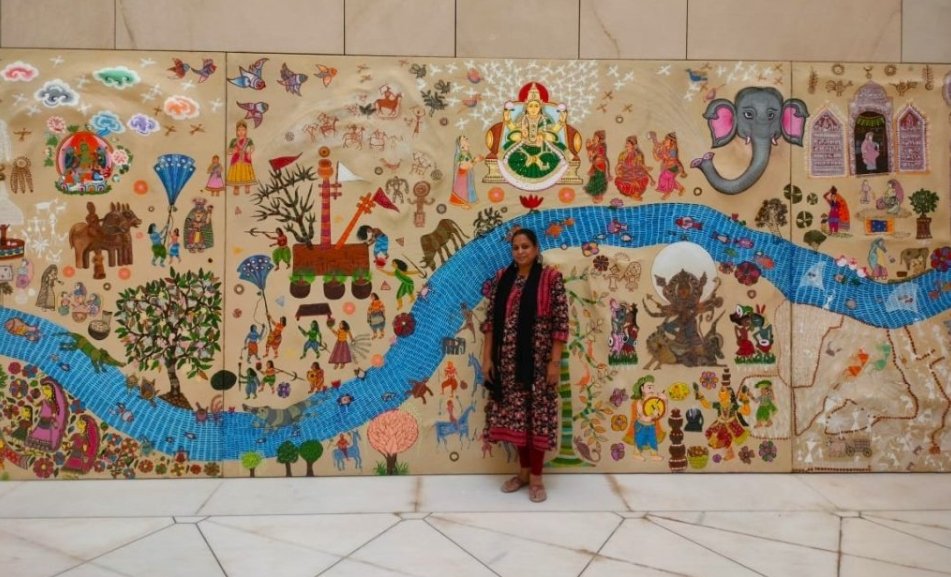
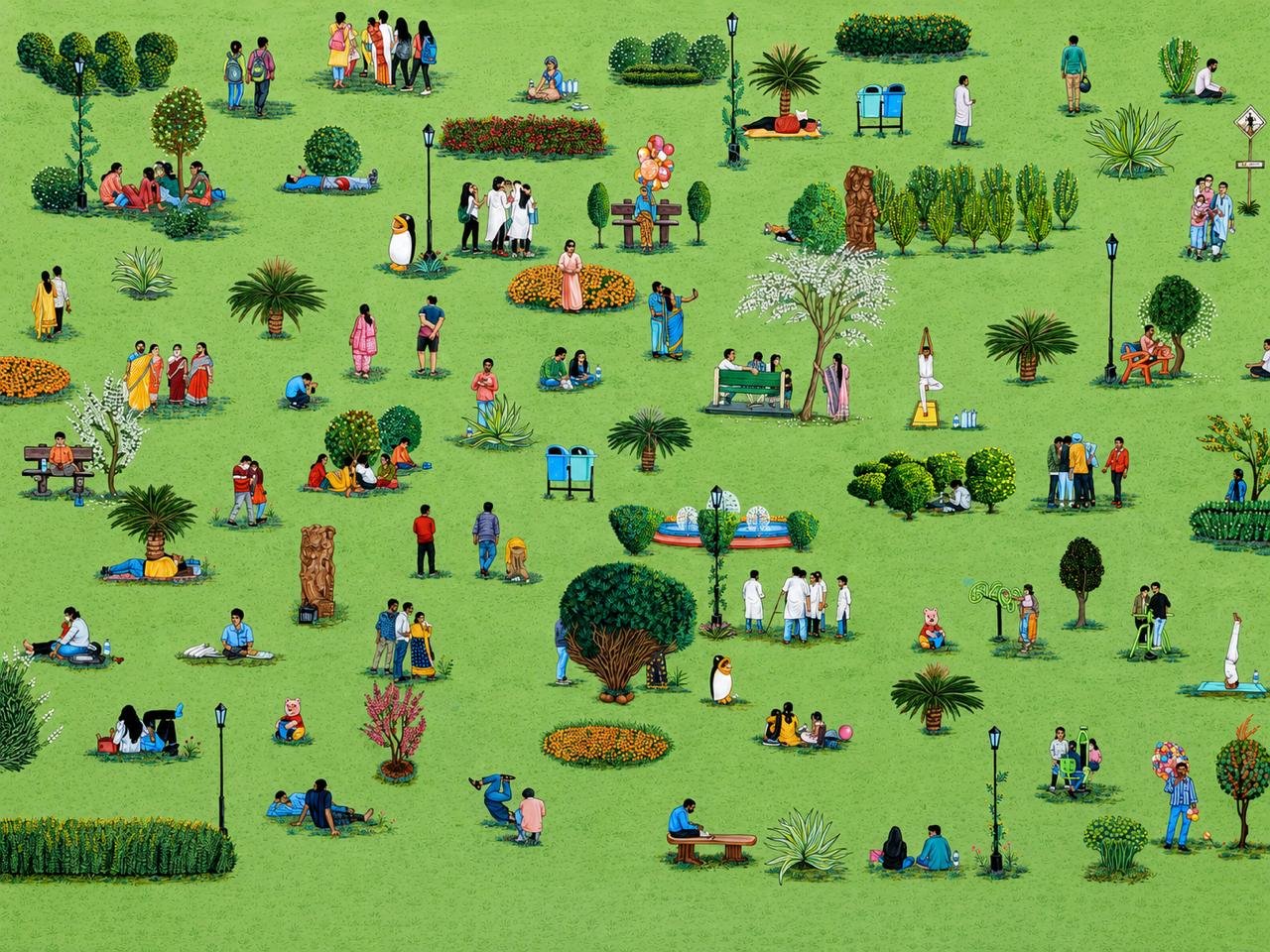
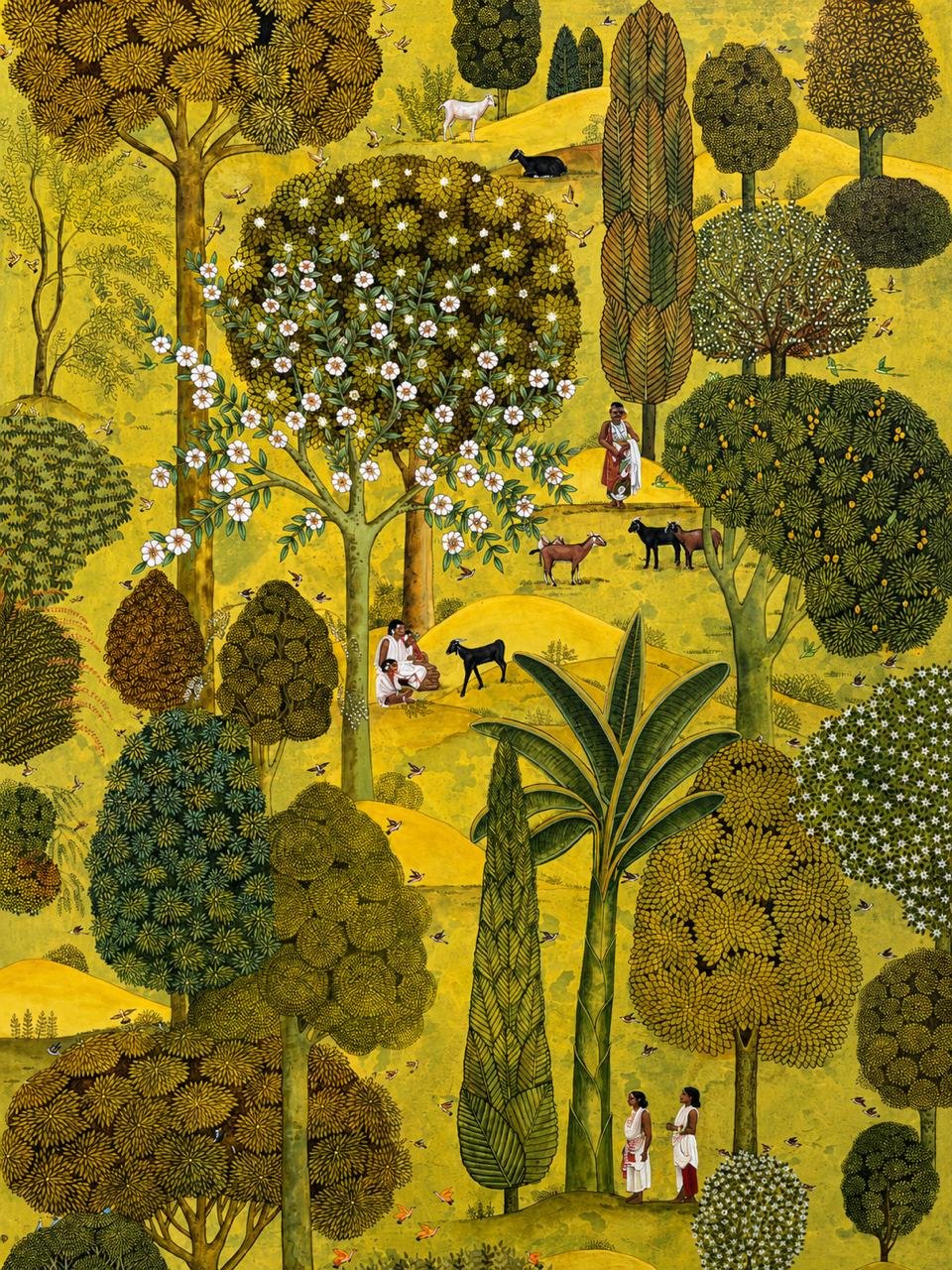
Art as a Way of Seeing
Children encounter the world differently from adults.
A tree may become a character. A family activity may become a story. A journey to a village may turn into an imaginative landscape. A festival can become a collection of colours and memories.
Majhi’s approach to creative learning encourages children to pay attention to such experiences.
Rather than beginning with the question of how to copy a particular picture, children can begin by asking what they see, what they remember and what they want to communicate.
This transforms art education from imitation into observation.
The Importance of Personal Experience
One of the central elements of Majhi’s educational approach is personal experience.
Her creative-learning activities encourage children to use everyday life as a starting point for artistic expression. Subjects can include household activities, trees and natural environments, village journeys, festivals, animals, personal memories and ordinary daily experiences.
Such subjects may appear simple, but they provide children with an accessible connection to art.
A child does not need to travel to a famous museum or study a complicated artistic theory before beginning to create.
Their own surroundings can become the first art classroom.
Moving Beyond Imitation
Traditional drawing exercises often ask children to reproduce an image shown by an adult.
While learning through examples can have value, Majhi’s approach gives greater importance to independent observation.
If a child draws a tree from personal experience, the result may not look like a scientifically accurate tree.
That is not necessarily the objective.
The important question becomes: What did the child notice?
Perhaps the tree’s shape was unusual. Perhaps birds were sitting on it. Maybe the tree was connected with a particular memory.
Art then becomes a form of personal communication.
Everyday Life as Creative Material
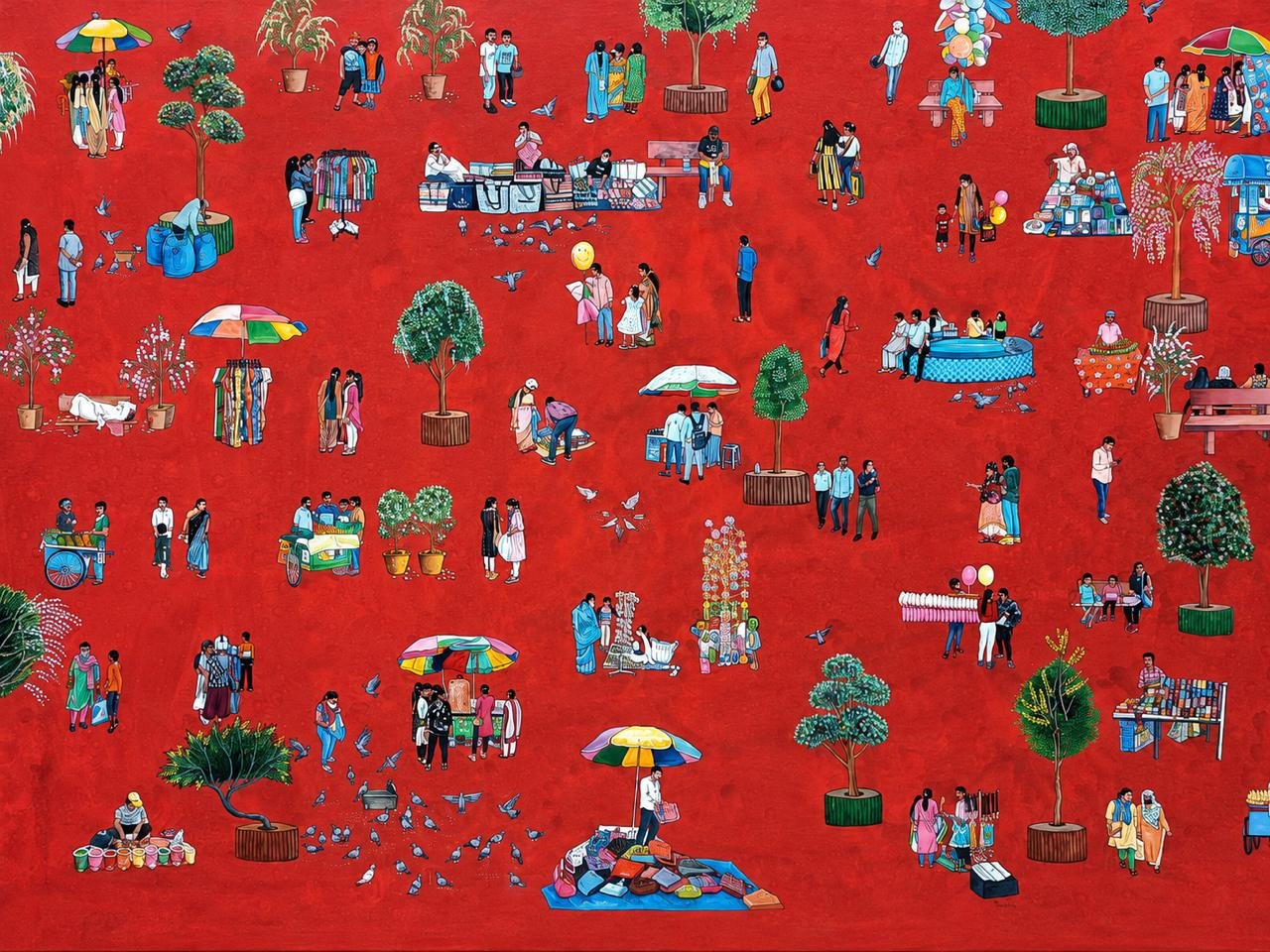
Majhi’s own artistic practice has long been connected with everyday environments.
Her observations of people, markets, neighbourhoods, animals and changing surroundings have informed her visual work.
Her educational practice carries a similar philosophy into children’s creative activities.
Everyday life can provide subjects that are familiar but also full of detail.
A household may contain relationships and routines.
A village journey may contain landscapes and people.
A festival may contain colour, movement and community.
Animals can introduce curiosity about nature.
Through these subjects, children learn to look more carefully at their own lives.
Connecting Art with Memory
Memory plays an important role in Majhi’s broader artistic philosophy.
Her own work explores cultural memory and changing environments.
In children’s art education, memory can similarly become a creative resource.
A child may remember a family celebration, a visit to a village, a favourite tree, a school activity or an encounter with an animal.
When that memory becomes an artwork, the child is not simply producing an image.
The child is preserving an experience.
This makes creative learning a potential form of personal storytelling.
Learning from Nature
Nature is another recurring subject in Majhi’s educational activities.
Trees, animals and natural surroundings can become starting points for observation.
Children can notice shapes, colours, textures and movement.
They can also begin to understand that their environment is connected with everyday life.
This approach has a wider connection with Majhi’s own artistic interests in ecology and relationships between people and nature.
Her work with indigenous communities and the Niyamgiri landscape similarly examines how environment and human experience are connected.
From Classroom to Community
Majhi’s educational work has not been limited to conventional classroom settings.
Her documented activities include workshops with residential schools, children’s festivals and educational initiatives across Odisha.
She has also participated in programmes involving organisations such as Gram Vikas and Tata Trust, as well as initiatives associated with Kalpanadham.
Such settings can bring children from different social and geographical backgrounds into contact with creative activities.
Art becomes a shared space for exploration.
Working with Underserved Communities
An important part of Majhi’s educational engagement has involved children from underserved communities.
She has also participated in earlier workshops involving children with disabilities.
This dimension of her practice reflects the broader community orientation of her artistic career.
Creative opportunities should not be restricted to children who already have access to formal cultural institutions.
Art can be brought into schools, community environments and other spaces where children live and learn.
Creativity and Confidence
Art education can provide children with opportunities to make decisions for themselves.
What should I draw?
What colours should I use?
How should I arrange the figures?
What story am I trying to tell?
These questions may seem simple, but they encourage independent thinking.
When there is no single correct answer, children can become more comfortable experimenting.
The resulting confidence can extend beyond art.
Observation as a Skill
Majhi’s educational approach places particular emphasis on observation.
Learning to observe means noticing details that might otherwise be ignored.
A child walking through a neighbourhood may notice how people arrange their shops.
Another child may notice the movement of animals.
Someone else may notice the changing colours of trees during different seasons.
These observations can become artistic material.
At the same time, observation is a valuable skill beyond art.
It can support curiosity, concentration and a deeper understanding of the world.
Art and the Local Environment
An important characteristic of Majhi’s approach is the use of local experience.
Children do not have to begin with distant or unfamiliar subjects.
Their own neighbourhood can become a source of inspiration.
A road, market, school, home, field, tree or festival can provide material.
This gives children’s artwork a strong relationship with place.
It also reflects Majhi’s broader artistic interest in regional memory and the relationship between people and environments.
Art as a Shared Experience
Community-based art is often about participation rather than simply producing a finished object.
Majhi’s children’s workshops reflect this idea.
The process of making art can create opportunities for children to share experiences with one another.
One child’s drawing may inspire another child’s memory.
Different interpretations of the same subject can demonstrate that people see the world differently.
This makes art a social activity.
Connecting Children with Cultural Memory
Festivals, village journeys and everyday community activities can also expose children to cultural traditions.
When children represent these experiences through art, they can reflect on their own cultural surroundings.
This is especially significant at a time when lifestyles are changing rapidly.
Creative activities can provide children with a way of remembering experiences that might otherwise become distant.
In this sense, art education can contribute to cultural continuity without turning tradition into something rigid.
The Influence of Traditional Art
Majhi’s own academic background includes an M.F.A. in Traditional Art.
Her professional practice subsequently expanded into contemporary and multidisciplinary forms, including community participation and public art.
This background helps explain her interest in connecting artistic learning with cultural experience.
Traditional knowledge does not have to remain confined to historical forms.
It can influence how people observe, create and understand their surroundings.
Children as Observers of Change
Children also provide a unique perspective on social change.
They experience changes in neighbourhoods, schools, technology, transportation and family routines.
Their drawings can reveal what aspects of their environment they consider important.
For an artist interested in modernization and cultural memory, children’s perspectives can be especially valuable.
They experience the present while growing up within environments shaped by the past.
The Relationship Between Art and Environment
Majhi’s broader artistic practice explores relationships between people and nature, traditional knowledge and contemporary life, and memory and modernization.
Her educational work reflects some of these same concerns on a smaller scale.
Children observe their environment.
They remember experiences.
They interpret community life.
They create visual responses.
The process demonstrates how artistic learning can connect personal experience with wider social and environmental questions.
From Creative Learning to Social Engagement
Majhi’s work with children is part of a larger practice that includes villages, tribal communities, urban neighbourhoods and public spaces.
Her community-based approach emphasises observation, listening and engagement with existing cultural practices.
This makes education an extension of her broader artistic philosophy rather than an isolated professional activity.
The artist becomes a facilitator of creative experience.
The Broader Role of the Artist-Educator
Contemporary artists increasingly work beyond galleries.
They may teach, conduct workshops, collaborate with communities and participate in public projects.
Majhi’s career reflects this expanded role.
Her professional activities include exhibitions, residencies, workshops, public-art interventions, community projects and educational initiatives.
Her work with children demonstrates how artistic practice can operate within learning environments as well as exhibition spaces.
Kalpanadham and Creative Possibilities
Kalpanadham is among the initiatives associated with Majhi’s educational and creative-learning activities.
Projects of this kind provide opportunities to connect imagination with practical artistic activity.
For children, the experience of creating something themselves can be as important as the final artwork.
The emphasis shifts from producing a perfect picture to discovering an individual response.
Art Without a Single Correct Answer
Perhaps one of the most valuable principles in creative learning is the acceptance of different interpretations.
Two children can observe the same tree and produce completely different drawings.
Neither has to be considered wrong.
Their artworks may reflect different memories, interests and ways of seeing.
This openness is particularly compatible with contemporary artistic thinking, where experimentation and individual interpretation are important.
A Continuation of Majhi’s Artistic Philosophy
Majhi’s work with children ultimately reflects the same principle that appears throughout her professional practice: look closely at the world before attempting to represent it.
Whether she is observing an urban neighbourhood, engaging with the Dongaria Kondh community, exploring natural pigments or working with children, observation remains important.
The difference is that in educational settings, she helps children develop this habit for themselves.
Conclusion
Satyabhama Majhi’s contribution to art extends beyond exhibitions and individual artworks.
Her approximately 15 years of engagement with children, schools and educational communities demonstrate a sustained commitment to creative learning. Through workshops and initiatives associated with residential schools, children’s festivals, Kalpanadham, Gram Vikas and Tata Trust, she has encouraged children to approach art through observation, memory and personal experience.
Her approach offers an alternative to an education system focused entirely on imitation.
A child’s home, neighbourhood, journey, festival, tree, animal or memory can become a legitimate artistic subject.
This philosophy reflects Majhi’s own artistic practice, where everyday environments and community experiences frequently become sources of creative enquiry.
For her, art education is therefore not simply about producing young artists.
It is about helping children look, remember, imagine and express.
By bringing creative learning into schools and communities, Satyabhama Majhi demonstrates how art can become a tool for observation, confidence, cultural memory and social connection—giving children the opportunity to discover that their own experiences are worthy of being seen and represented.